
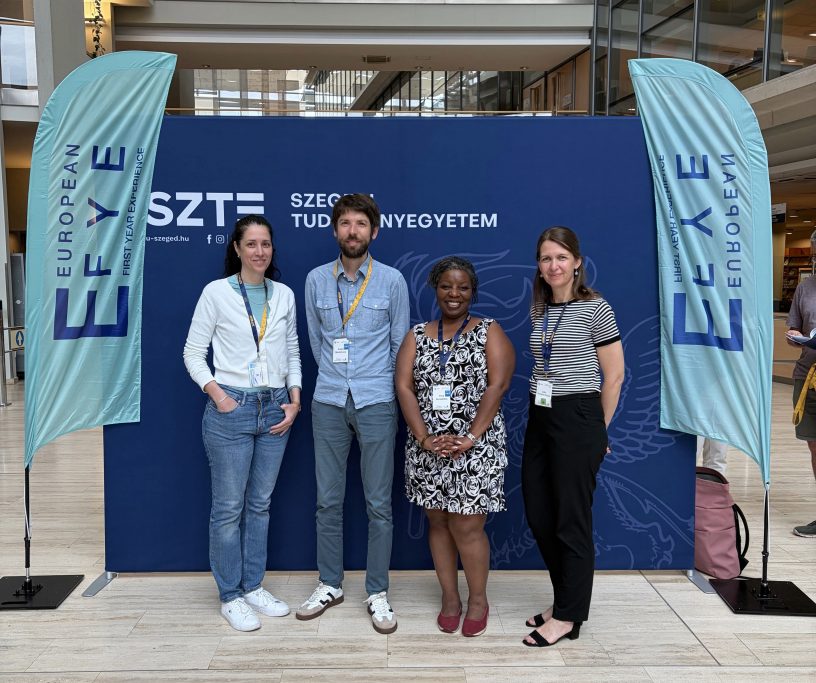


“Stacking skills and connecting students: A blueprint for microcredentials in the OpenEU Alliance”: This was the title of the presentation given by yours truly at the 20th European First Year Experience, which took place from 10-12 June at the University of Szeged, Hungary. The presentation focused on the recently completed Virtual Exchange pilot with UNED and how the methodology might be modified to inform collaborative courses and microcredentials within the OpenEU context.
Around 300 administrators, academics and interested parties took part in the annual EFYE conference – and what a grand time was had!
Réka Futász and Lídia Vinczéné Fekete of Corvinus University whom we’d met in Budapest, were also at EFYE 2026.
The line-up of presentations covered many areas on inducting students into their studies and making the transition into higher education smooth and successful. The keynotes were particular highlights, with Csilla Stéger focusing on machine learning predictors of student success, labour market demand-based curricula analysis and some findings from a pilot on what she dubbed “molecular adaptive online learning.” Dr Michelle Morgan, the Dean of Students at the University of East London focused on the importance of adopting a whole institutional integrated approach to improve the experience, progression, retention and success of students and staff.
Another noteworthy presentation was that given by Dr André Biederbeck, with Dr Prue Goredema fielding questions from the captive audience. “Developing AI and sustainability competencies in the first-year curriculum” — a snapshot of work currently underway, co-authored by Dr Moritz Kohls and Frank Wistuba.
Not only did we listen and learn at EFYE 2026: our work also brought new directions to the discourse. The interaction within our sessions was robust and rewarding, allowing us to school others on two novel ways to integrate all essential AI literacy skills into curricula for disparate student groups. We also put the matter of microcredentials in the spotlight — some had heard murmurings of this transformation but had yet to see a clear articulation. Go studyFIT!
The conference organising team, particularly Péter Szakál and Lilla Kocsis, are to be commended for their excellent work in making EFYE 2026 a roaring success. The programme offered a rich blend of research, reflection and lively discussion, whilst the seamless coordination behind the scenes ensured that not a single session felt rushed or disjointed. Kudos to the University of Szeged for a job well done.
Like us, most of the conference attendees had never been to Hungary, let alone this obscure city near the Serbian border. Located 170 km south east of Budapest, Szeged is the country’s third largest city, known for its 300+ days of sunshine each year and its highly ranked university. Statues, plaques and pop-ups memorialise alumni and staff of the University of Szeged who have made an international splash, for example: Novel Prize winners Albert Szent‑Györgyi (Medicine, in 1937, for the discovery of vitamin C); George A. Olah (Chemistry, 1994, for ‘carbocation’) and Ferenc Krausz (Physics, in 2023, for insights into electron motion). The university admin building is located smack bang in the middle of town, adorned by a fountain and picture-perfect topiary. This was the venue of the official conference opening officiated by Rector László Rovó and EFYE Chairman Will Carey.
As if the workshops, presentations and plenaries weren’t enough to delight us, the Hungarians outdid themselves with the food. The culinary delights laid out for lunches, tea breaks and the welcoming reception would leave any Michelin restaurant in the dust. Paprika-flavoured canapés, cheesy nibbles, stews spiced to perfection (yes — including authentic Hungarian goulash), creamy pasta dishes, exquisite consommés and crisp green salads — no palate was left behind.
Volumes more could be written about the marvellous days just passed and how the Budapest meetings and Szeged conference will inform and transform aspects of our work at studyFIT. But it is already time to turn the insights gained into a plan of action that will shape the months ahead.
Leave a Reply